
A productivity system is supposed to make work easier to manage, not become another body of work that has to be managed. Yet it is easy for a simple method to grow into a complicated network of lists, tags, dashboards, reminders, review rituals, and rules. Each addition may seem useful on its own, but together they can create a system that demands constant attention. The problem is not structure itself. The problem appears when maintaining the structure begins competing with the work it was designed to support.
A sustainable system takes a different approach. Instead of trying to control every part of the day, it creates just enough structure to reduce unnecessary decisions and prevent important commitments from disappearing. It also needs to survive ordinary disruption: an unexpected meeting, a busy week, a change in priorities, or a day when concentration is lower than expected. The best system is therefore not necessarily the most detailed one. It is the one that continues to provide useful guidance without requiring constant repair, customization, or supervision.
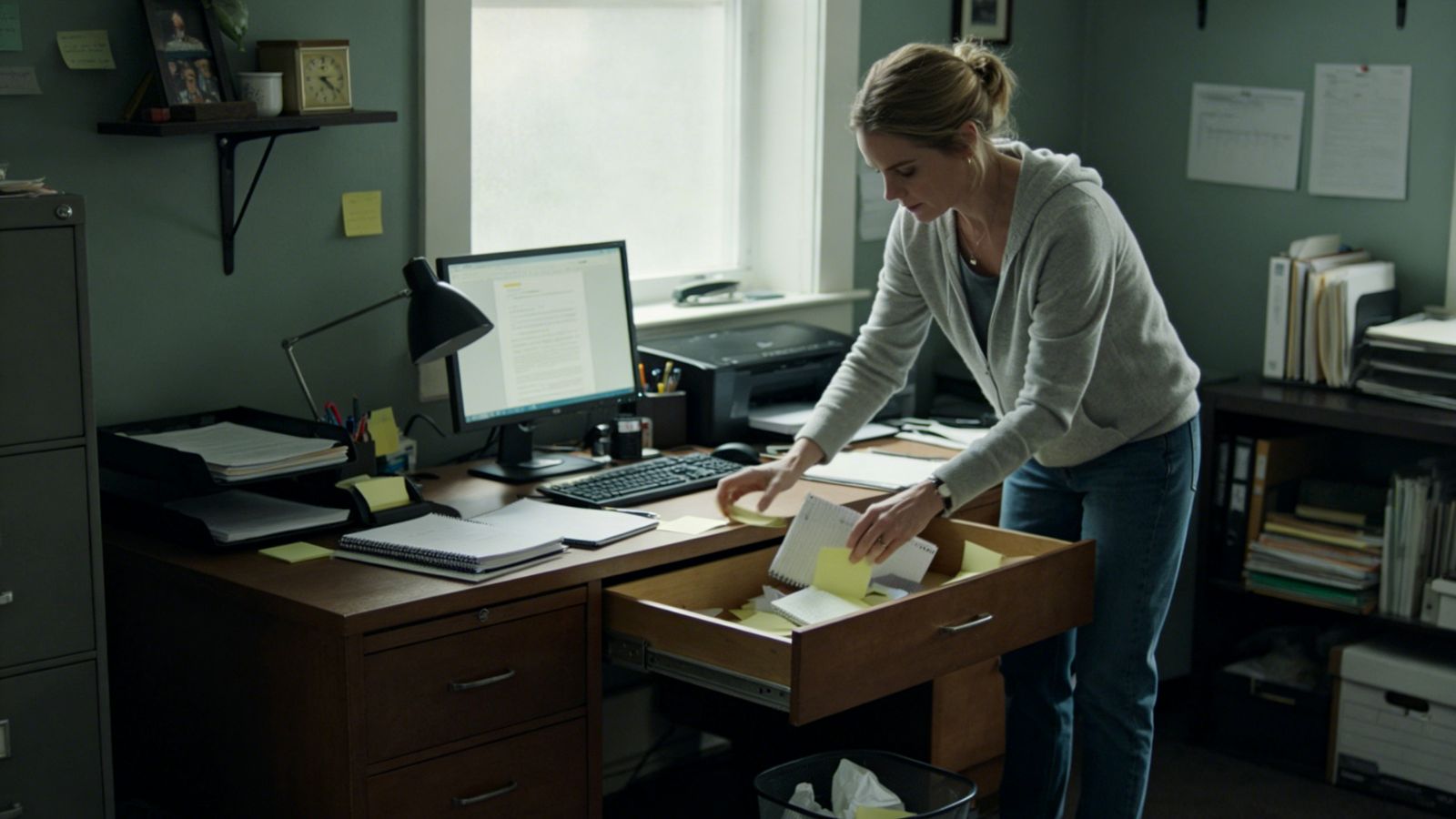
Every additional rule introduces some amount of maintenance. A tagging system requires tags to be applied consistently, multiple task lists need to stay synchronized, and elaborate dashboards have to be reviewed before they can provide useful information. Even when each individual step takes only a few seconds, repeated decisions can accumulate into meaningful cognitive and administrative load. Research on decision-making suggests that repeatedly evaluating options can become costly, particularly when people have to reconsider similar choices throughout the day. A productivity system can therefore create friction even while appearing highly organized.
The more important question is whether each piece of complexity earns its maintenance cost. A project label may be worthwhile if it helps someone find important information quickly, while ten nearly identical labels may create more confusion than clarity. A weekly review can reveal stalled work and outdated commitments, while a daily review that takes forty-five minutes may simply postpone execution. This creates a useful test for system design: whenever a rule, tool, or ritual is added, ask what specific problem it solves and how often that benefit is actually needed. If the answer is vague, the additional structure may not be justified.
Complexity also becomes especially expensive when circumstances change. A detailed morning routine may work perfectly on an uninterrupted day but become difficult to follow when a meeting starts early or an urgent request appears. The same is true of tightly scheduled task systems that require constant rescheduling whenever reality differs from the original plan. A sustainable system should therefore be judged by how well it handles imperfect days, not only by how elegant it looks when everything goes according to plan. Resilience is often more valuable than precision when a system has to operate for months rather than a few ideal weeks.
A useful starting point is to separate capturing commitments from deciding what they mean. When a new task, idea, request, or reminder appears, it can first go into a trusted capture point without requiring immediate classification. This prevents every incoming item from triggering a separate decision about priority, project, category, deadline, or destination. Later, during a predictable review period, those items can be clarified and assigned an appropriate next step. For many people, this simple separation reduces the temptation to reorganize their entire system every time something new arrives.
A single capture point does not necessarily mean that everything must remain in one list forever. Calendars may still be better for fixed appointments, project tools may be necessary for collaborative work, and reference systems may require their own structure. The useful distinction is between having one reliable place to capture new commitments and forcing every type of information into one universal container. A capture inbox reduces the chance of forgetting something, while specialized systems can remain responsible for information that genuinely needs different treatment. The goal is to prevent unnecessary fragmentation without pretending that every kind of information behaves the same way.
The same principle applies to prioritization. Instead of continuously asking what should happen next, establish a predictable point at which priorities are reviewed and a small number of actions are selected. The exact cadence can vary with the nature of the work: a busy project may require daily attention, while a slower personal workflow may need only a few reviews each week. What matters is that prioritization happens deliberately rather than every time a new notification arrives. A system becomes lighter when decisions are grouped into useful moments instead of being scattered throughout every hour of the day.

Detailed schedules can create the impression of control while becoming difficult to maintain. If every hour and fifteen-minute interval has a predetermined purpose, one unexpected meeting can force a chain of changes across the rest of the day. For many people, broader time blocks are easier to maintain because they establish useful boundaries without requiring constant reconstruction. A morning block might be reserved for concentrated individual work, while an afternoon period accommodates communication, meetings, or administrative tasks. The schedule still provides direction, but it does not assume that the day will unfold exactly as planned.
The value of a time block is not that it guarantees productivity. Its main function is to protect an opportunity for a particular kind of work. A two-hour period labeled “project development” can remain useful even if the specific task changes, while a rigid schedule that dictates exactly which document must be completed at 9:15 can become obsolete after a single interruption. This distinction makes broad blocks more resilient. They describe the role of a period rather than attempting to predict every action that will occur inside it. When circumstances change, the block can often survive without requiring the entire system to be redesigned.
Time blocking also works best when it is combined with realistic capacity. A calendar filled from morning to evening leaves no space for unexpected work, transitions, or simple recovery. That can make a carefully planned system feel like a constant series of failures. A sustainable schedule should leave some uncommitted space and distinguish between work that genuinely requires protected attention and work that can move around. The objective is not to eliminate empty time or maximize calendar utilization. It is to make sure that important work has a reasonable place to happen without turning every minute into an obligation.
A sustainable productivity system should continue functioning when the original plan breaks. Unexpected meetings, urgent client requests, travel, illness, family responsibilities, and changing project priorities are ordinary features of working life rather than evidence that a person has failed at productivity. A rigid system often responds to disruption by creating more work: tasks must be rescheduled, priorities must be recalculated, and routines must be rebuilt. A resilient system absorbs some disruption automatically because it does not depend on every part of the day remaining predictable.
One practical way to build resilience is to distinguish between essential commitments and preferred routines. An important deadline may need explicit protection, while a preferred morning ritual can be skipped or shortened without creating a serious consequence. Similarly, a project can have a small set of genuinely important next actions rather than a long sequence that becomes useless whenever circumstances change. This creates room for different levels of capacity. On a productive day, additional work can be completed; on a difficult day, the system still identifies what matters most. The structure remains useful without demanding perfect adherence.
External constraints deserve the same consideration. Employees may have managers, meetings, and shared deadlines that they cannot simply move, while freelancers may have clients whose requests determine the order of work. Personal responsibilities can impose additional limits that no productivity technique can remove. A realistic system works inside these constraints instead of treating them as obstacles that should somehow be optimized away. Clear communication about availability, priorities, and deadlines can sometimes protect focus more effectively than another internal rule. Sustainable productivity begins with the conditions people actually work under.
Regular review is valuable because priorities change and systems become outdated. However, a review does not need to become a large administrative ritual. A short recurring check can ask three practical questions: What moved forward? What is stuck? What should be dropped, deferred, or clarified? These questions direct attention toward decisions rather than documentation. A longer review may be appropriate for major projects or quarterly planning, but routine maintenance should remain proportional to the amount of change in the underlying work. The purpose of reviewing a system is to improve its usefulness, not to produce evidence that the review itself was completed.
Subtraction deserves as much attention as addition. Productivity systems naturally accumulate old tags, abandoned projects, duplicate lists, unused reminders, and procedures that once seemed necessary. Each item may be harmless in isolation, but together they make the system harder to understand. This can be thought of as a form of maintenance debt: yesterday's solution remains in place even after the original problem has disappeared. Regularly removing obsolete elements keeps the system smaller and makes the remaining structure easier to trust. A useful review therefore asks not only “What should I add?” but also “What no longer deserves a place here?”
A simple elimination test can help. If a feature, rule, or ritual consistently requires more attention than the clarity it produces, it should be reconsidered. That does not mean removing everything that requires effort; some structure is necessary for complex work. The point is to distinguish productive maintenance from maintenance for its own sake. A project review that prevents missed deadlines may easily justify its time, while repeatedly reorganizing a task list simply to make it look cleaner probably does not. The strongest systems are not maintenance-free. They are selective about which maintenance deserves to exist.

Simplicity has limits. A system with one undifferentiated list may look elegant but become difficult to use when someone manages multiple projects, recurring obligations, deadlines, and shared responsibilities. If everything is treated identically, genuinely important differences can disappear. A calendar appointment is not the same as an optional task, and a collaborative project may require information that a personal checklist does not contain. The objective is therefore not to minimize the number of tools or rules at any cost. It is to keep only the structure that solves a real problem.
This is where the idea of a minimum viable productivity system becomes useful. At its simplest, a person needs reliable answers to three questions: What do I need to remember? What deserves attention now? When will I work on it? A capture point can answer the first question, a short list of active priorities can answer the second, and protected time or an appropriate calendar block can answer the third. Additional structures should earn their place by solving problems that these basic elements cannot handle. This creates a practical boundary between useful complexity and decorative complexity.
The minimum viable system should also be allowed to grow when the work genuinely requires it. A small freelance project may need little more than a task list and calendar, while a large collaborative project may require documentation, dependencies, ownership, deadlines, and status tracking. The mistake is assuming that either extreme is universally correct. The better principle is proportionality: complexity should increase when the underlying work becomes more complex, not simply because a new productivity tool offers another feature. A sustainable system stays as small as practical while remaining large enough to represent reality accurately.
For someone rebuilding an overloaded system, a reasonable starting configuration can remain deliberately small. Use one reliable capture point for new commitments, maintain a short list of genuinely active projects or priorities, and reserve a recurring period for deciding what deserves attention next. Add a calendar when time-specific commitments require one, and use a separate project or reference tool only when the work cannot be represented adequately by the simpler structure. This creates a foundation without requiring the person to redesign every aspect of their workflow before meaningful work can resume.
The system should then be tested through normal work rather than judged by how organized it appears. Notice where information is lost, where priorities remain unclear, where deadlines are missed, and where maintenance repeatedly consumes unnecessary time. Those observations reveal which additional rules are actually justified. If tasks frequently disappear, the capture process may need improvement. If projects become difficult to navigate, some project-level organization may be warranted. If priorities change constantly, a more frequent review may help. Each addition should respond to an observed failure rather than an abstract desire for a more sophisticated system.
Over time, the system can become more capable without becoming unnecessarily complicated. The guiding question remains the same: Does this element make important work easier enough to justify the attention it requires? If the answer is yes, keep it. If the benefit is unclear, simplify or remove it. Sustainable productivity is not about finding a perfect collection of rules, tools, or rituals. It is about building a dependable container for work—one that reduces avoidable decisions, survives ordinary disruption, and stays small enough that maintaining the system never becomes more important than using it.