
Great ideas rarely appear when you're sitting comfortably at your desk with plenty of time to work. More often, they show up while reading an article on your phone, replying to a message between meetings, or walking away from your computer. The challenge isn't capturing the idea itself. The challenge is remembering why it mattered when you return to it later.
Many people save links, screenshots, voice notes, and highlighted passages across multiple devices throughout the day. Hours or days later, they can still find the content, but they can no longer remember its purpose. A saved article becomes a forgotten bookmark, and an interesting quote turns into an isolated sentence with no clear connection to ongoing work. Preventing this disconnect requires a simple capture system that preserves both the information and the context behind it.
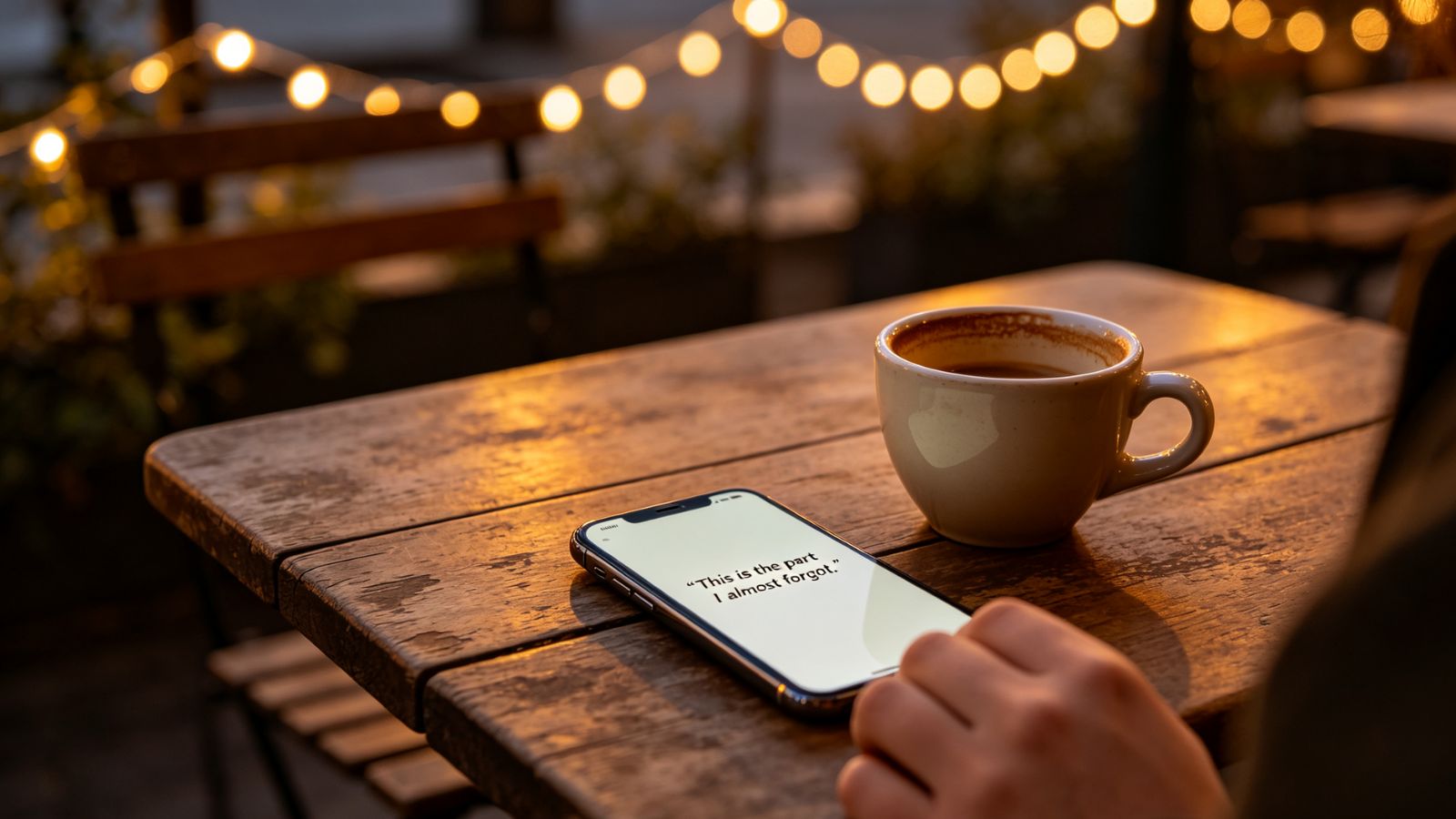
Capturing information on a mobile device usually prioritizes speed. You save a webpage with one tap, take a screenshot, or quickly copy a paragraph into a notes app before moving on to something else.
The problem is that quick capture often removes the surrounding context.
Consider a few common situations:
A researcher saves a paper during a commute but later forgets which section was relevant to the project.
A freelancer screenshots a client request and later struggles to remember which deliverable it referred to.
A developer saves a code example but can no longer recall the specific problem it was meant to solve.
In each case, the information survives, but the original intent disappears.
One of the biggest causes of information loss is fragmentation.
Ideas are often scattered across:
Browser bookmarks
Screenshot folders
Messaging apps
Voice recorders
Note-taking applications
Email drafts
When every device uses a different capture method, finding information becomes unnecessarily difficult.
Instead of creating separate systems for every device, establish one primary collection point where all new information is stored temporarily. This doesn't require complicated software or a sophisticated knowledge-management framework. The goal is simply to create a predictable destination for every new idea.

Capturing information quickly doesn't mean capturing it without explanation.
A short contextual note often provides enough information to reconnect with an idea later.
Instead of saving only a link, add a brief reminder such as:
Instead of saving...Add a context anchor...Industry reportCompare with customer surveyResearch articleReference for next presentationCode snippetPotential solution for login issueScreenshotDiscuss during the next client meeting
These small annotations require only a few extra seconds but dramatically improve retrieval later.
Many people try to organize information while they're still collecting it.
They immediately start:
Creating folders
Adding tags
Renaming files
Building categories
This approach usually slows the capture process and increases friction.
A more sustainable workflow separates collection from organization.
Capture first. Organize later.
A quick mobile note should remain a temporary record rather than a perfectly categorized document. Processing can happen during a scheduled review session when you have access to a larger screen and more time.
Not every idea should be captured in the same way.
Different types of information benefit from different formats:
Information typeSuggested capture methodInteresting articlesLink sharing or web clippingQuick thoughtsShort text notesComplex ideasVoice-to-textVisual referencesScreenshots or imagesAction itemsTask lists or reminders
Choosing the right method reduces the temptation to force every idea into a single format.
A capture system without regular review eventually becomes a storage archive filled with forgotten information.
A short weekly review is usually enough to:
Delete irrelevant material
Merge duplicate notes
Convert useful ideas into projects
Move important information into long-term storage
Without periodic review, even the most efficient capture system gradually turns into another collection of unread links and abandoned notes.
Capturing ideas across multiple devices isn't really a synchronization problem. It's a context problem.
The goal isn't to save more information. It's to preserve enough context that your future self can immediately understand why something was worth saving in the first place.
A simple workflow built around a single capture destination, brief context anchors, and regular review sessions is often far more effective than an elaborate system filled with folders, tags, and complicated organizational rules.
The most valuable capture system isn't the one that stores the largest number of ideas. It's the one that allows those ideas to remain useful long after the moment of inspiration has passed.