
Professional work rarely fits a single tempo. Some tasks can be completed in compact bursts with little loss when attention is interrupted, while others depend on maintaining a detailed mental model for an extended period. Treating both types of work as if they require the same schedule can create unnecessary friction. A short session may be useful for clearing modular tasks, yet frustrating when applied to complex writing or problem-solving. Conversely, reserving long blocks for simple administrative work can consume valuable calendar space without producing a meaningful benefit.
The more useful question is not whether short focus sessions or extended deep work periods are universally better. It is whether the structure of the session matches the structure of the task. Two characteristics are especially helpful: how much continuous context the work requires and how expensive it is to restart after an interruption. Tasks with low context demands and low restart costs can often tolerate shorter sessions. Work that requires sustained reasoning, synthesis, or creative development usually benefits from protecting longer periods in which the underlying problem can remain active in attention.

Professional tasks differ substantially in how much mental context they require. Administrative processing, routine correspondence, data entry, simple formatting, and many operational updates are relatively modular: the work can often be divided into discrete units, and completing one unit does not require remembering a large network of previous decisions. If an interruption occurs, it may be possible to return to the task by simply identifying the next unfinished item. This makes shorter sessions practical because the cost of stopping and restarting remains relatively small. The work may still require concentration, but it does not necessarily depend on maintaining a complex mental model continuously for a long period.
Other tasks are much more continuous. Writing a sustained argument, designing software architecture, analyzing ambiguous information, developing strategy, or debugging an unfamiliar system may require several related ideas to remain active at once. An interruption can force the worker to reconstruct assumptions, reread previous material, and recover the reasoning that led to the current point. Research on task switching and attention residue suggests that interruptions can make this re-engagement more difficult, although the size of the effect varies with the person, task, and interruption. For these tasks, the important variable is not simply session length but restart cost: how much mental work is required to become fully engaged again.
Short focus sessions are useful when the task has a natural stopping point or can be divided into relatively independent pieces. A session of roughly 20 to 45 minutes is common in productivity practices, but the exact duration is less important than whether the work can be paused without losing substantial context. Processing an inbox, updating a project tracker, reviewing short documents, checking routine requests, and completing discrete operational tasks can often fit this structure. Short sessions can also make demanding work feel more approachable when a person is reluctant to begin, because the commitment is limited and the next step is clearly defined.
The main advantage of a short session is therefore not that a particular number of minutes is inherently optimal. It is that the format lowers the barrier to starting and provides a manageable container for work that does not require prolonged immersion. Short sessions are also useful in environments where interruptions are unavoidable. Someone moving between meetings, customer requests, and operational responsibilities may have little realistic opportunity for a two-hour uninterrupted block. In that situation, shorter periods can turn otherwise fragmented time into usable work time. They are especially valuable when the alternative is waiting for a perfect uninterrupted period that rarely appears.
The limitation becomes clearer when a task depends on continuity rather than completion of isolated units. Imagine writing a complex analysis in 30-minute intervals. Each session may produce useful progress, but every break can require the writer to reconstruct the argument, reconsider earlier assumptions, and remember what question the previous session was trying to answer. The same problem appears in debugging, research synthesis, strategic planning, and other work where the relationships between ideas matter as much as the individual steps. A timer can create a convenient stopping point, but convenience does not necessarily mean the task itself has reached a natural boundary.
Short sessions can also become counterproductive when the break interrupts useful momentum. Once someone has resolved an initial obstacle and begun connecting ideas, stopping simply because a preset interval has ended may introduce unnecessary friction. This does not mean that every demanding task should be worked on continuously for hours. It means that session boundaries should ideally follow the structure of the work rather than being imposed without regard to it. A useful test is simple: if stopping requires significant effort to remember where you were, why you were there, and what comes next, the task probably deserves a longer uninterrupted window.

Extended deep work periods are most useful when progress depends on maintaining concentration around a complicated problem. Here, “deep work” refers to sustained, interruption-limited attention on a cognitively demanding task rather than a specific productivity system or fixed number of minutes. Analytical writing, software design, strategic planning, research synthesis, complex financial modeling, and difficult problem-solving often benefit from this arrangement because the worker can keep relevant assumptions and relationships active while developing the solution. The primary advantage is continuity: less time is spent repeatedly rebuilding the mental state required to continue.
A longer block does not need to mean an entire morning or an extreme period of uninterrupted effort. For many tasks, a protected block of around an hour or more may provide enough continuity to reach a meaningful stage of work, while the appropriate duration will vary considerably. A writer may need enough time to develop an argument, while a programmer may need enough time to understand a difficult interaction between components. The right question is therefore not “How long should deep work last?” but “How much uninterrupted time does this particular task need before a meaningful stopping point appears?” That framing avoids turning deep work into another rigid rule.
Longer sessions also have costs. Sustained concentration requires effort, and the quality of work can decline when fatigue accumulates. The point at which this happens differs between people and tasks, so a universal maximum for daily deep work is difficult to justify. Someone performing familiar analytical work may sustain useful concentration differently from someone learning a new technical subject. Sleep, workload, environmental distractions, experience, and the complexity of the problem can all affect how long a person can work effectively. Treating an extended session as successful simply because it lasted a certain number of hours can therefore encourage time spent concentrating after the quality of thinking has already declined.
Long blocks can also be impractical in highly interrupt-driven environments. Employees may have meetings that cannot be moved, clients may require rapid responses, and collaborative projects may depend on frequent communication. A schedule built around several large protected blocks can become frustrating if those blocks are repeatedly broken. There is also a risk of over-reserving time for complex work when some of the day’s responsibilities are genuinely modular. The objective is not to maximize the amount of time labeled “deep work.” It is to protect longer periods when the work itself benefits from continuity, while allowing other responsibilities to remain flexible.
A practical way to choose between the two approaches is to examine the task before deciding on a timer or calendar block. First, ask whether the work is modular or continuous. If it can be divided into relatively independent units, shorter sessions are usually easier to accommodate. Then ask about restart cost. If stopping means simply moving to the next checklist item, a short session is unlikely to create much friction. If stopping means rereading documents, reconstructing assumptions, reopening several sources, or rebuilding a complicated line of reasoning, the task has a higher continuity requirement and deserves stronger protection from interruption.
A third consideration is whether the task has a meaningful natural stopping point. Some activities have obvious boundaries: one email has been answered, one record has been updated, or one document has been reviewed. Other work becomes clearer only after a period of exploration. Research, writing, design, and problem-solving often develop through stages that cannot be predicted precisely at the beginning of a session. In those cases, an artificially short timer can interrupt the process just as the problem becomes easier to understand. Session length should therefore follow the work's cognitive structure whenever possible rather than relying on a universal productivity formula.
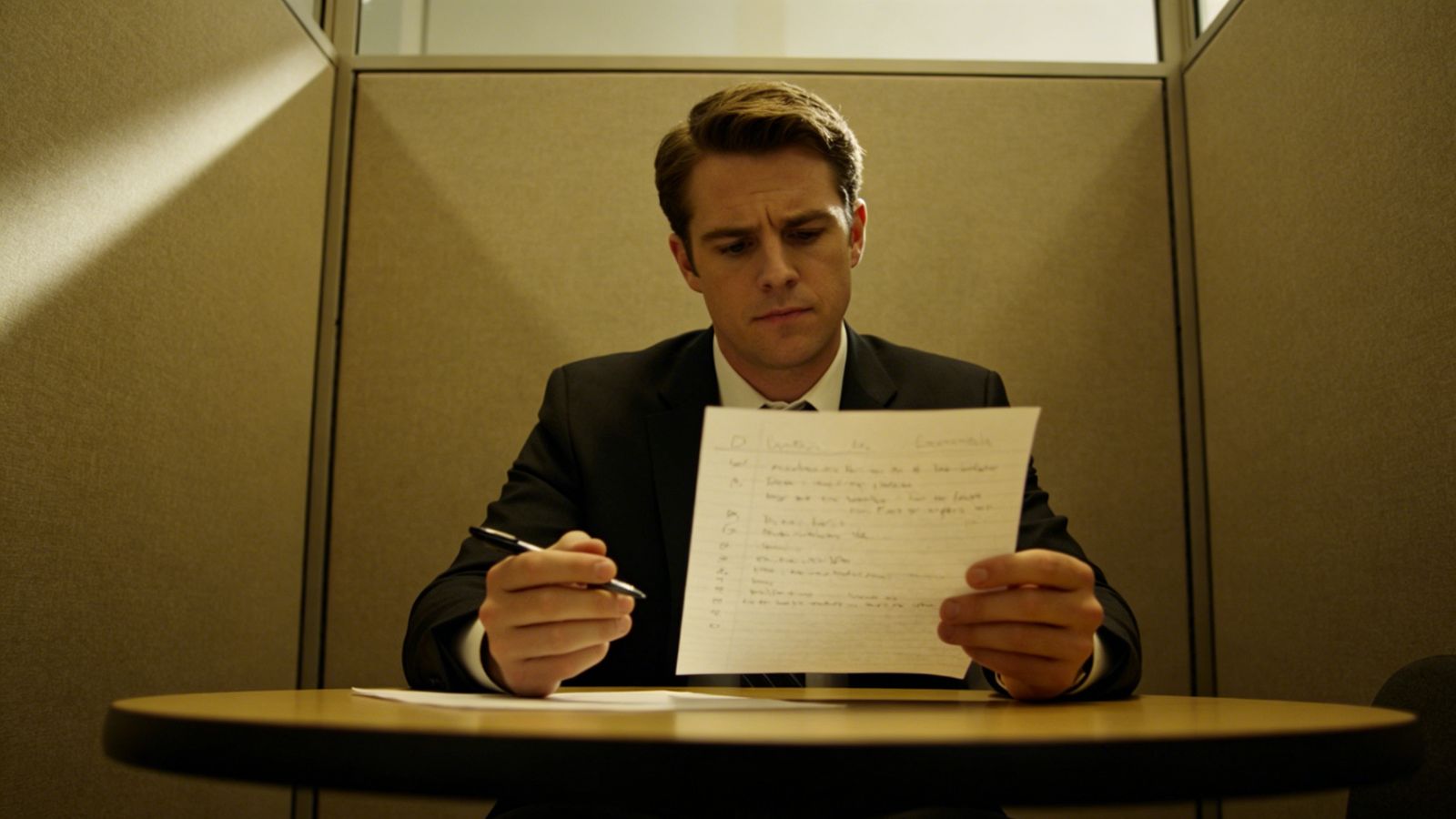
The surrounding environment can be just as important as the task itself. A person working in a quiet environment with control over their calendar may be able to protect long periods for complex work. Someone working in an open office, handling customer requests, or attending frequent meetings may have fewer realistic opportunities for uninterrupted concentration. In the second situation, shorter sessions may not be the theoretically ideal choice, but they may be the most practical one. A useful productivity method has to work within actual constraints rather than assuming that interruptions can always be eliminated.
Individual differences matter as well. Some people become immersed relatively quickly, while others need more time before complex work begins to flow. Energy levels can change throughout the day, and the same task may feel substantially easier during one period than another. Instead of treating these differences as reasons to find a perfect schedule, they can be used as information. Notice when demanding work becomes easier to sustain, when interruptions are most disruptive, and when shorter sessions feel unnecessarily restrictive. Over a week or two, these observations can reveal whether a task is genuinely constrained by time or whether it is being constrained by an overly rigid work method.
Most professional schedules do not need to choose one method exclusively. A hybrid approach often works better because different categories of work have different continuity requirements. Short sessions can be used for administrative tasks, communication, routine reviews, and other modular responsibilities, while one or more protected blocks can be reserved for work that requires sustained concentration. This arrangement also prevents simple tasks from consuming the best available periods of attention. When the most demanding work receives protected time and modular work is grouped into flexible windows, the schedule becomes a reflection of the work rather than a single productivity ideology.
The hybrid approach should remain flexible enough to change when the nature of the day changes. A day dominated by meetings may require several shorter sessions, while a project deadline may justify protecting a longer block. Similarly, a complex task that initially appears to require deep work may become modular after the difficult reasoning has been completed. The useful habit is to reassess the structure when the work changes rather than continuing to follow the original schedule automatically. Session length is a tool for managing attention, not a measure of discipline. The best arrangement is the one that protects continuity when continuity matters and preserves flexibility when it does not.
Rather than adopting a fixed focus method immediately, start by observing the work that regularly causes friction. Choose one or two demanding tasks and note what happens when they are placed in shorter sessions. If progress repeatedly stops just as the problem becomes clearer, or if each session begins with substantial time spent reconstructing context, experiment with a longer protected period. For modular work, test shorter blocks and observe whether the work remains easy to resume. The goal is not to prove that one method is superior. It is to discover where session boundaries help the work and where they unnecessarily interrupt it.
After a week or two, review the results using practical questions rather than productivity metrics alone. Which tasks became easier to start? Which tasks suffered when interrupted? Where did you spend time reconstructing context? Which sessions ended naturally, and which ended only because a timer or calendar block said they should? These observations provide more useful information than simply counting how many focus sessions were completed. Over time, they can produce a personal set of defaults: shorter sessions for low-context, easily restarted work and longer blocks for tasks where continuity has a meaningful effect on progress.
Short focus sessions and extended deep work periods are not competing productivity philosophies. They solve different scheduling problems. Short sessions reduce the barrier to starting, fit fragmented schedules, and work particularly well when tasks are modular or easy to resume. Longer blocks protect the continuity required by complex reasoning, creative synthesis, and work with a high restart cost. Neither approach should be treated as a universal rule, because the demands of the task and the realities of the work environment determine whether additional uninterrupted time is actually useful.
The most reliable principle is to match the structure of attention to the structure of the work. Before choosing a timer, ask whether the task can be safely interrupted, how much context must remain active, how expensive restarting will be, and whether the surrounding environment can realistically support uninterrupted time. When the answers point toward continuity, protect a longer window. When they point toward modularity, use shorter sessions without hesitation. This approach makes session length a practical decision rather than a productivity ritual, allowing the schedule to adapt to the work instead of forcing every task into the same pattern.