
Choosing a project methodology is not simply a matter of deciding whether a team prefers Agile, Waterfall, or a combination of both. The methodology determines how work is planned, how decisions are made, how teams respond to uncertainty, and how risks are managed throughout the project lifecycle.
Many organizations make the mistake of selecting a methodology because it is popular in their industry. A technology company may adopt Agile because competitors use it, while a large enterprise may choose Waterfall because leadership wants predictable milestones. Neither decision is automatically correct. A methodology only creates value when it matches the conditions of the work.
A software team developing a new customer product may need frequent experimentation because the final solution is not fully known at the beginning. A construction team delivering a major facility may require detailed planning because late changes can create significant cost and schedule impacts. Both projects need discipline, but the type of discipline is different.
The better question is not “Which methodology is the best?” It is “What kind of uncertainty, risk, and coordination challenge does this project need to manage?”
Project methodologies are often treated as fixed systems, but they are better understood as ways of organizing decisions. Agile, Waterfall, and Hybrid approaches each provide different answers to important questions: How much should be planned upfront? How often should priorities change? Who makes decisions when new information appears?
Before choosing a methodology, organizations should examine the environment surrounding the project. The first factor is uncertainty. Some initiatives begin with clear requirements, established technology, and predictable outcomes. Others involve customer discovery, new markets, or complex technical challenges where important information will only become available after work begins.
The second factor is the cost of change. Adjusting a website design after receiving customer feedback may require limited effort. Changing a manufacturing process after equipment installation or modifying a regulated system after approval may require significant time and expense.
The third factor is organizational decision-making. A small team with direct access to customers and leadership can often adapt quickly. A global organization with multiple approval layers may need stronger governance and documentation to coordinate decisions across departments.
A methodology should support how the organization actually operates, not how leadership wishes it operated.
Instead of starting with Agile versus Waterfall comparisons, organizations can begin with three practical questions. These questions reveal the type of operating model a project requires.
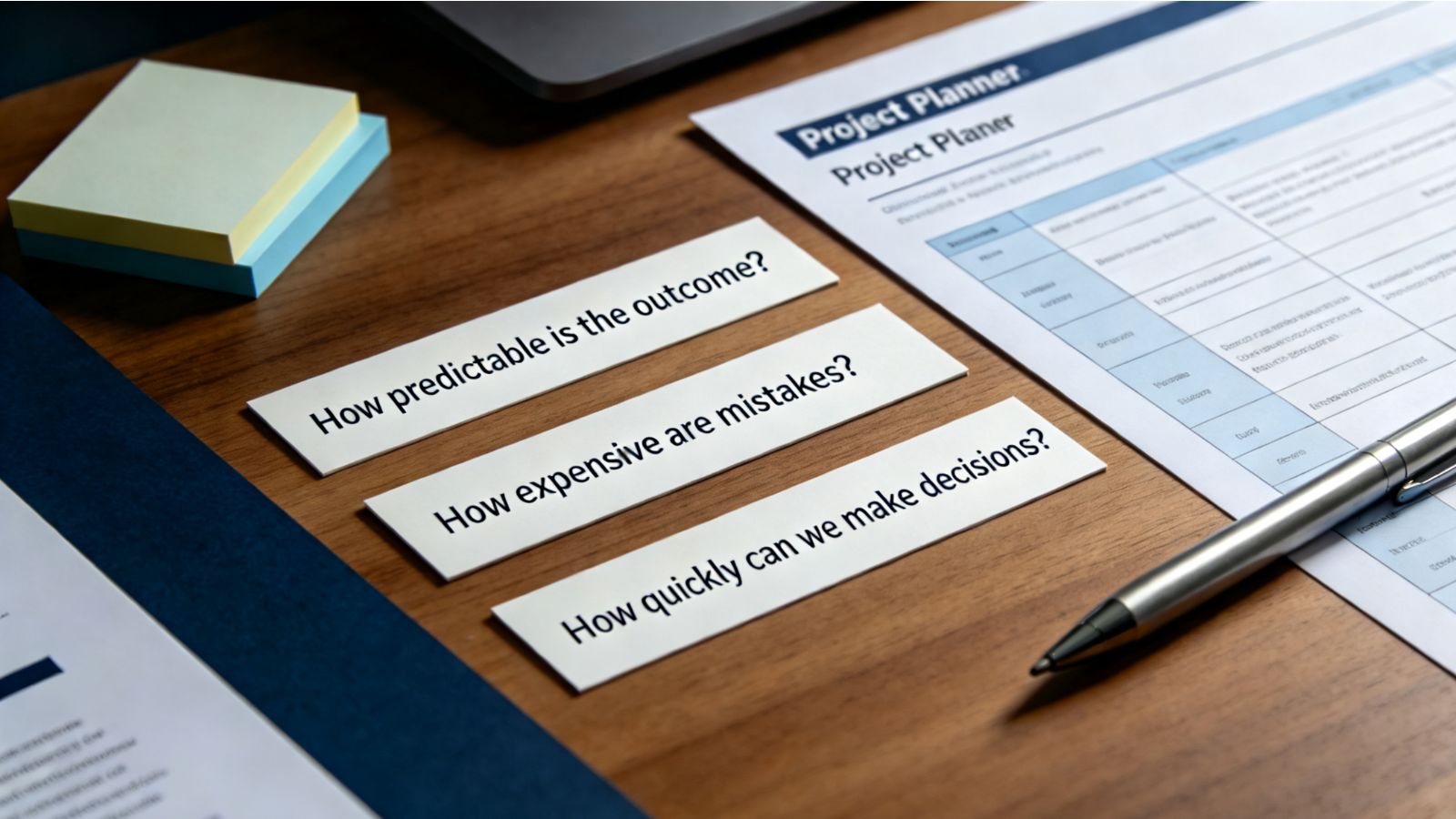
The first question focuses on how much the team already understands about the solution. If requirements are stable and the desired outcome is clearly defined, a structured approach can reduce confusion. Teams can create detailed plans, establish milestones, and measure progress against agreed expectations.
If the outcome is uncertain, however, planning everything in advance may create false confidence. A company creating a new digital product may know the business problem it wants to solve but still need to discover what customers actually value. In this situation, smaller cycles of development and review can reduce the risk of investing heavily in the wrong solution.
The second question examines the consequences of being wrong. Some projects can recover from mistakes quickly, while others cannot.
A marketing team testing a campaign can adjust messaging after early results. A company building physical infrastructure may not have the same flexibility after construction begins. The higher the cost of late changes, the more valuable early planning and formal review processes become.
This does not mean high-risk projects should avoid all flexibility. Instead, teams should identify which decisions require certainty and which areas can remain open to adjustment.
The third question considers the speed of decision-making. Agile approaches depend on regular feedback and timely decisions. If teams must wait weeks for approvals before adjusting priorities, the benefits of iteration may be reduced.
On the other hand, large organizations often require documented decisions because many stakeholders need visibility and accountability. In those environments, structured checkpoints can prevent confusion and maintain alignment.
A methodology succeeds when it fits the organization’s ability to make decisions, not just the project team’s preferred workflow.
Agile methodologies are most effective when teams need to learn while building. Instead of assuming that every requirement can be understood before execution begins, Agile teams deliver smaller increments, gather feedback, and adjust based on what they discover.
This approach is common in software development, digital products, and innovation-focused projects. A company launching a new customer application may understand its overall objective but still need to test which features provide the greatest value. Building and reviewing smaller releases allows the team to make informed decisions before committing too many resources.
The strength of Agile is not simply faster delivery. Its real advantage is reducing the risk of spending significant time and money on a solution that does not solve the right problem.
However, Agile requires the right organizational conditions. Teams need access to stakeholders, clear priorities, and enough authority to make decisions. A company cannot gain the benefits of Agile if every small adjustment requires lengthy executive approval.
Agile can also become ineffective when teams focus on rituals rather than outcomes. More meetings and more frequent updates do not automatically create better results. The process must help teams learn, prioritize, and deliver meaningful improvements.
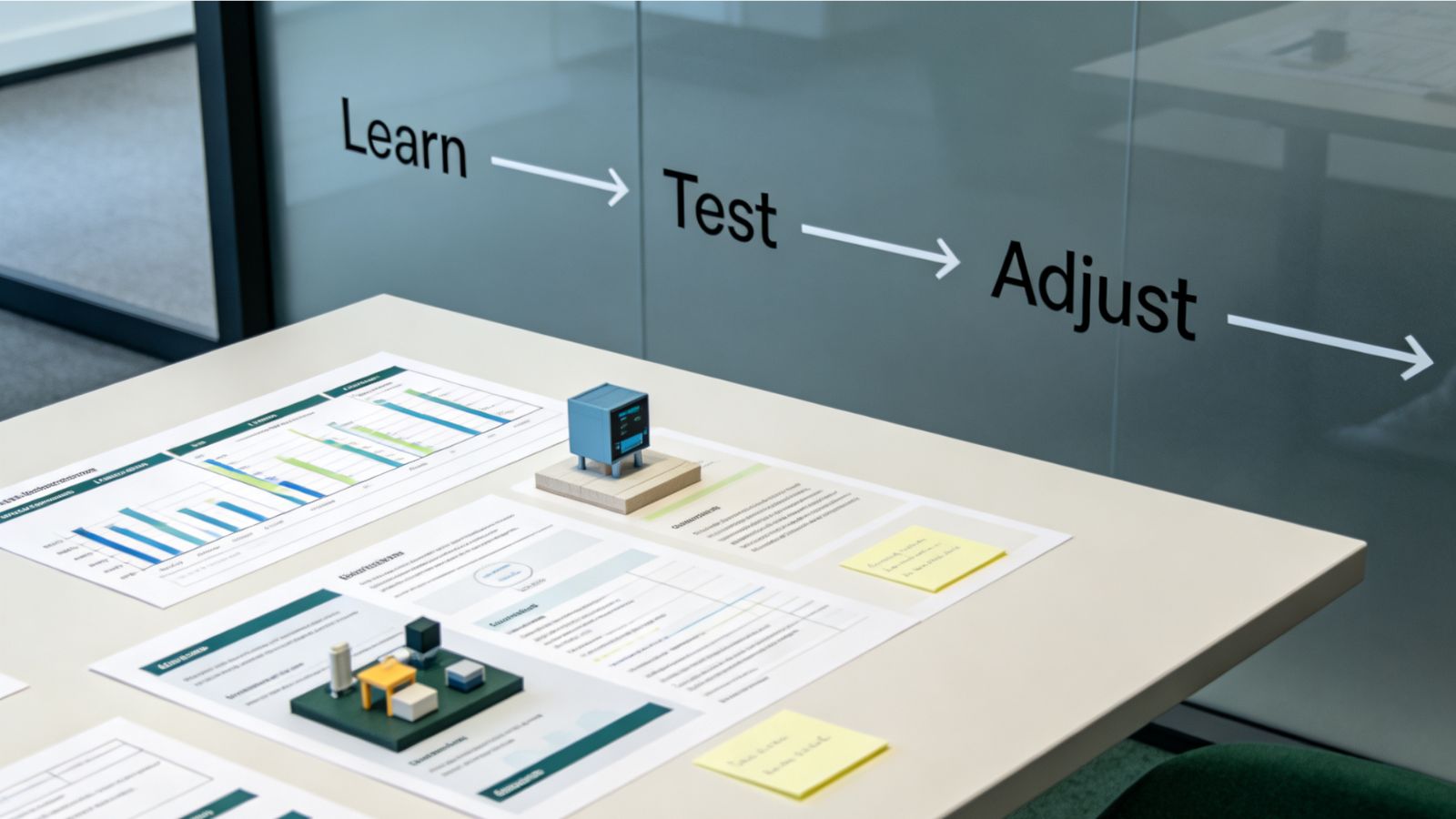
Waterfall remains useful when a project requires predictability, formal planning, and controlled execution. Although it is sometimes described as outdated, many industries continue using sequential approaches because certain types of work benefit from defined stages.
Projects involving construction, manufacturing, infrastructure, or strict contractual requirements often require careful planning before execution begins. Teams may need approved designs, documented requirements, and clear responsibilities before moving forward.
The main advantage of Waterfall is visibility. Stakeholders can understand project phases, expected deliverables, and decision points before significant resources are committed.
The limitation is that Waterfall works best when teams have a reasonable understanding of the final outcome. If important requirements are unknown at the beginning, a highly sequential approach can create expensive rework when assumptions prove incorrect.
Waterfall is not a question of old versus new. It is a question of whether the project benefits more from predictability than continuous adjustment.
Many projects contain different types of work that require different management approaches. This is where Hybrid methodologies become valuable.
A company developing an enterprise software platform may use structured planning for budgeting, security reviews, and infrastructure decisions while allowing product teams to improve features through iterative development. The organization maintains control where mistakes are costly while allowing flexibility where learning creates value.
The strength of Hybrid approaches is intentional balance. Teams can decide which parts of a project require formal approval and which parts benefit from experimentation.
The challenge is avoiding a process that combines the disadvantages of multiple approaches. A Hybrid methodology should not mean adding extensive documentation, additional meetings, and constant changes without clear boundaries. The combination must have a purpose.
A successful Hybrid approach creates clarity about where teams can adapt and where they must follow established controls.
Most methodology failures are not caused by the framework itself. They usually happen when the organization’s expectations conflict with the way the methodology works.
A company may adopt Agile while still expecting fixed scope, fixed deadlines, and approval processes designed for traditional projects. Teams are told to adapt, but they are evaluated as if nothing should change.
Another organization may select Waterfall for a project where customer needs are still unclear. The team may successfully complete each planned stage but discover later that the final solution does not address the original business problem.
Hybrid approaches can fail when they are created without clear decisions. Simply combining Agile meetings with Waterfall documentation does not create a better system. The organization must understand which problems each practice is solving.
The best methodology is not the one with the most processes. It is the one that helps people make better decisions under the conditions they actually face.
Project methodologies should change as organizations change. A startup may rely on lightweight Agile practices because speed and learning are critical. As the company grows, it may introduce stronger planning and governance to manage larger teams, more customers, and more complex risks.
Mature organizations rarely remain committed to one methodology forever. They adjust their operating model as projects become more complex and decision-making requirements change.
Agile, Waterfall, and Hybrid are not competing identities. They are different approaches for managing different types of uncertainty and coordination challenges.
The strongest organizations do not choose a methodology because it is popular. They choose it because it improves the way people plan, communicate, and solve problems. A project succeeds when the process supports the work rather than becoming another obstacle the team must overcome.