
Introducing AI into a workplace is rarely just a technical exercise. The software may work perfectly, yet employees still avoid it if using the new capability means leaving the tools they already depend on. A customer-service representative may have to move information from a CRM into a separate AI application, a project manager may need to copy meeting notes into another window, or an analyst may have to move data between systems before asking for assistance. Each extra step adds friction, and the value of the AI feature becomes harder to realize.
A more practical approach is to bring AI capabilities into the software where the work already happens. Instead of asking employees to adopt another destination, organizations can connect language models, search systems, classification services, or automation workflows to existing enterprise applications. The user interface can remain familiar while the underlying workflow gains new capabilities.
The goal is not to make every process autonomous. In many cases, the better design is simply to reduce repetitive work while keeping people responsible for decisions that require judgment.
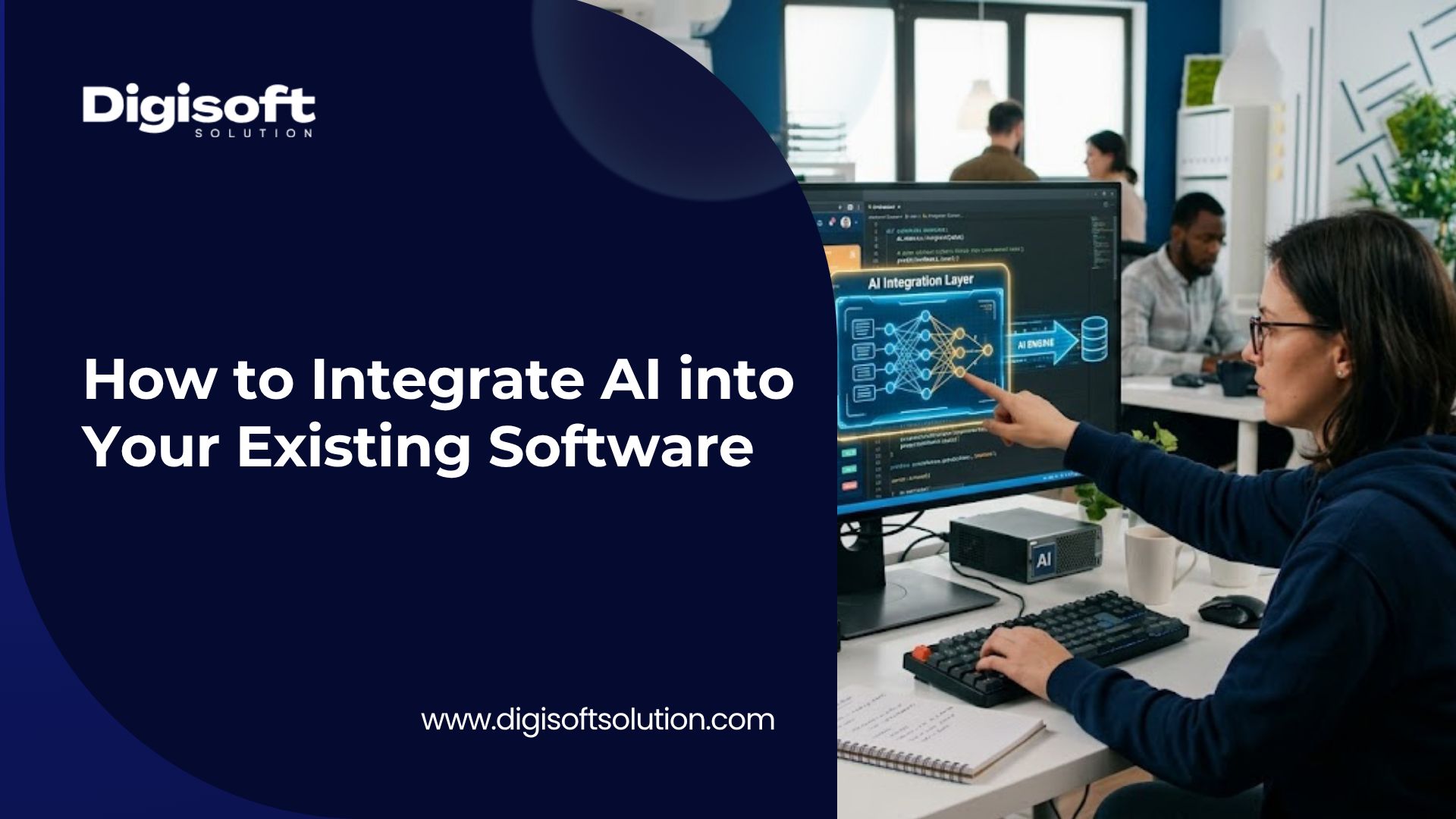
Moving between applications is sometimes unavoidable, but repeated switching becomes particularly inconvenient when the task itself depends on information from several systems. Consider a support agent reviewing a customer record while preparing a response. If the agent has to copy the conversation into a separate AI tool, generate a draft, return to the CRM, and then manually connect the result to the customer record, much of the benefit comes from the model rather than from the integration.
The same issue appears in project management, document review, sales operations, and internal knowledge search. The more information that has to be moved manually, the more opportunities there are for missing context, copying the wrong data, or leaving the final result disconnected from the system of record.
The copy-and-paste bottleneck: Moving internal information into an external AI service adds manual work and may create a security or compliance issue if the destination has not been approved for that type of data.
Workflow fragmentation: If an AI-generated summary or draft remains outside the application that owns the underlying record, employees may have to copy the result back manually or maintain it in a separate location.
Additional training requirements: A new interface, account, permission model, or prompting workflow creates another process for employees to learn. Adoption can suffer when the new tool adds work without solving an obvious problem.
Loss of context: A standalone tool may receive only the information that a user manually provides. Important permissions, customer history, project status, or document relationships can be lost along the way.
These are integration problems as much as they are AI problems. Keeping the AI capability close to the relevant data and workflow can remove several unnecessary steps.
A useful integration does not necessarily require a new front-end application. In many cases, the existing enterprise interface can remain the primary workspace while AI services operate behind it.
For example, an AI capability inside a CRM might summarize a customer conversation, identify unresolved issues, or prepare a draft response. In a project-management system, the same type of service might summarize a long discussion or identify potential action items. The important point is that the generated information appears alongside the record that gives it context.
Several architectural patterns can support this model.
Native platform extensions: Enterprise software with supported extension frameworks can expose AI features through existing pages, side panels, actions, or workflow components. This is often the cleanest option when the platform provides the required APIs and permission controls.
API-based services: An organization can place an AI service behind an API layer that receives approved inputs, calls the required model or retrieval system, and returns structured results to the existing application. This approach allows teams to keep the user interface largely unchanged while controlling how data moves between systems.
Event-driven workflows: Some AI tasks do not need to happen while a user is waiting. Document classification, ticket summarization, or internal knowledge indexing can run after an event such as a new record, uploaded file, or completed conversation. The result can then appear in the existing workflow.
Managed extension layers: When native integration options are limited, a controlled browser or desktop extension can sometimes add contextual functionality to an approved application. This approach requires careful attention to permissions, data handling, update management, and compatibility with the host software.
The right choice depends on the application, data sensitivity, latency requirements, and available integration interfaces. There is no single architecture that fits every enterprise environment.

AI integration becomes harder to trust when it changes important business records without making the change visible. A generated answer may be useful, but it is still a generated answer. The system needs to distinguish between assistance and an authorized business action.
For many workflows, a better pattern is to let AI prepare information while leaving the final decision with the employee.
In-place suggestions: AI can provide a draft, summary, classification, or recommendation within the existing form or workspace. The employee can review the result before accepting it.
Familiar interactions: Existing interface patterns should remain recognizable. A side panel, contextual action, or familiar menu can be easier to adopt than a completely separate application.
Clear system status: Users should be able to tell when a response is generated, when information is still being processed, and when an action has actually been committed to the underlying system.
Reversible actions: Where practical, automated changes should be reviewable or reversible. This matters particularly for edits to customer records, project schedules, documents, or other persistent data.
Graceful fallback: If an AI service becomes unavailable, the core workplace application should continue to perform its normal functions. An optional AI feature should not become a single point of failure for an essential business process.
This distinction between assistance and automation is important. A summary can usually be generated without changing the underlying record. Updating a financial transaction or sending an external communication is a different matter and may require explicit approval.
Embedding AI into workplace software also changes the way enterprise data flows through the system. The model may need access to customer records, documents, internal conversations, or other information that is already protected by organizational permissions.
The integration should not create a second, weaker permission system.
Permission-aware retrieval: The AI service should receive only information that the requesting user is authorized to access. This can be enforced through delegated authorization, permission-aware APIs, or another approved access-control mechanism.
Controlled data boundaries: Organizations should define which information may be sent to an AI service, where processing occurs, how long the information is retained, and whether the provider may use submitted data for other purposes.
Audit logging: Important AI-assisted actions should generate appropriate records showing what happened, when it happened, and, where necessary, which user or service initiated the action.
Sensitive-data handling: Personal information, confidential documents, credentials, payment information, and other restricted data should follow the organization's existing classification and handling policies.
Source traceability: When an AI-generated answer depends on enterprise documents or records, the application should preserve enough source context for the result to be checked when accuracy matters.
Permission handling deserves particular attention because an AI search function can potentially expose information more broadly than the original application if access checks are not carried through correctly.
For example, an employee who cannot open a restricted HR document should not receive a summary of that document simply because an AI assistant can retrieve it on the employee's behalf.
Adding another service to a workplace workflow inevitably introduces another dependency. The AI provider can experience latency, an API can return an error, or a model can produce a result that fails validation.
A resilient integration plans for those cases before deployment.
Non-critical AI functions can often operate asynchronously. A document summary, for instance, does not necessarily need to block the user from opening the document. The system can process it in the background and display the result when it is ready.
For real-time features, the application should establish sensible timeout behavior and clear fallback states. If an AI-generated draft cannot be produced, the original form should still be available. If a classification service fails, the record can remain in its normal workflow rather than becoming inaccessible.
Validation also matters. Structured outputs should be checked against expected formats before they are written into enterprise systems. A date field should contain a valid date. A required identifier should match the expected format. An action that could create an irreversible business consequence should not be triggered solely because a model returned a plausible-looking sentence.
Successful integration should be measured by the workflow it improves, not simply by the number of AI requests generated.
Useful measures can include the time required to complete a task, the amount of manual data entry removed, the frequency of corrections, the percentage of AI suggestions that employees accept or modify, and the number of workflows that fall back to manual processing.
Quality matters alongside speed. A feature that saves several seconds but regularly produces incorrect summaries may create more work later. Similarly, an automated action that increases throughput while creating difficult-to-audit changes may not be appropriate for a sensitive process.
A small pilot can reveal these trade-offs before an AI capability is introduced across an entire organization. The pilot can focus on one workflow, establish baseline performance, and measure both the benefits and the failure cases.
Integrating AI into workplace software works best when the technology fits the workflow rather than forcing employees to create a new workflow around the technology. Existing applications can remain the primary workspace while AI handles tasks such as summarization, classification, retrieval, drafting, and other forms of repetitive processing.
The integration still needs boundaries. Permissions must carry through to AI-assisted retrieval, sensitive data needs appropriate handling, generated outputs should be validated where necessary, and core business processes should continue to function when the AI service is unavailable.
The most useful implementation is therefore not necessarily the one with the most automation. It is the one that removes unnecessary work while keeping the surrounding system understandable, controllable, and dependable.