
The modern workplace has become increasingly dependent on continuous communication. Whether teams work from a traditional office, a home workspace, or a hybrid environment, collaboration tools have transformed into the operating system of professional life. Video meetings, messaging platforms, shared documents, and project management software have made it easier than ever to stay connected. At the same time, they have made it significantly harder to disconnect long enough to complete meaningful work.
Many professionals no longer struggle because they lack information or resources. Instead, they struggle because their attention is permanently divided. They spend the first hour of the day responding to messages, checking dashboards, and reacting to notifications before making meaningful progress on their highest-value tasks. By lunchtime, their attention has already been distributed across email threads, chat channels, calendar alerts, and status meetings. The result is a familiar feeling of busyness without a corresponding sense of accomplishment.
The challenge is not that meetings are inherently harmful. Effective meetings remain essential for decision-making, collaboration, and project alignment. The problem emerges when meetings become the default solution for every organizational question. Protecting deep work in a meeting-centric environment requires a different approach to communication, one that recognizes that focused attention is a limited resource rather than an unlimited organizational asset.
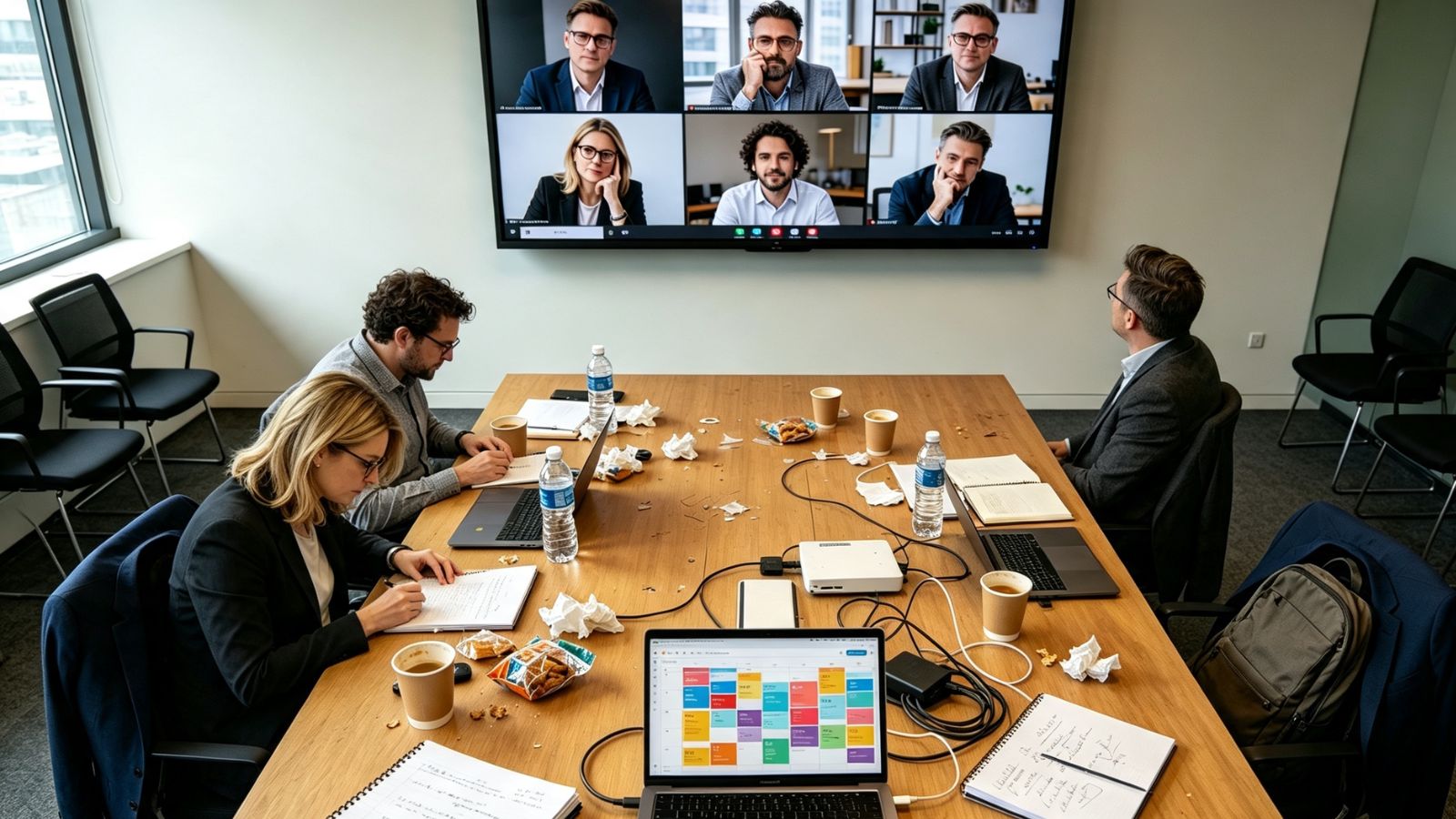
Meeting overload rarely appears overnight. It usually develops through a gradual process that feels completely reasonable in the moment. A team schedules a weekly project update to improve communication. Another recurring meeting is added to coordinate with a different department. A leadership review appears every month, followed by a customer check-in, a planning session, and a retrospective. Individually, each meeting seems justified. Collectively, they begin to consume the entire workweek.
Consider a typical day for a product manager. A 9:00 a.m. planning meeting is followed by a 10:30 client call. After lunch, there is a cross-functional update at 1:00 p.m., a stakeholder review at 3:00 p.m., and a project check-in at 4:30 p.m. On paper, this schedule leaves several open periods for focused work. In reality, those fragmented blocks are often too short to support complex problem-solving, strategic planning, or creative thinking. Instead of moving deeply into a task, people remain mentally positioned between their previous meeting and the next interruption.
This pattern creates a hidden productivity problem because calendars measure activity rather than output. A schedule filled with meetings can create the impression that a team is highly engaged, even when meaningful progress has slowed. Employees begin to compensate by moving important work into evenings, early mornings, or weekends. Over time, the workday becomes dominated by coordination, while the actual work that drives projects forward is pushed into personal time.
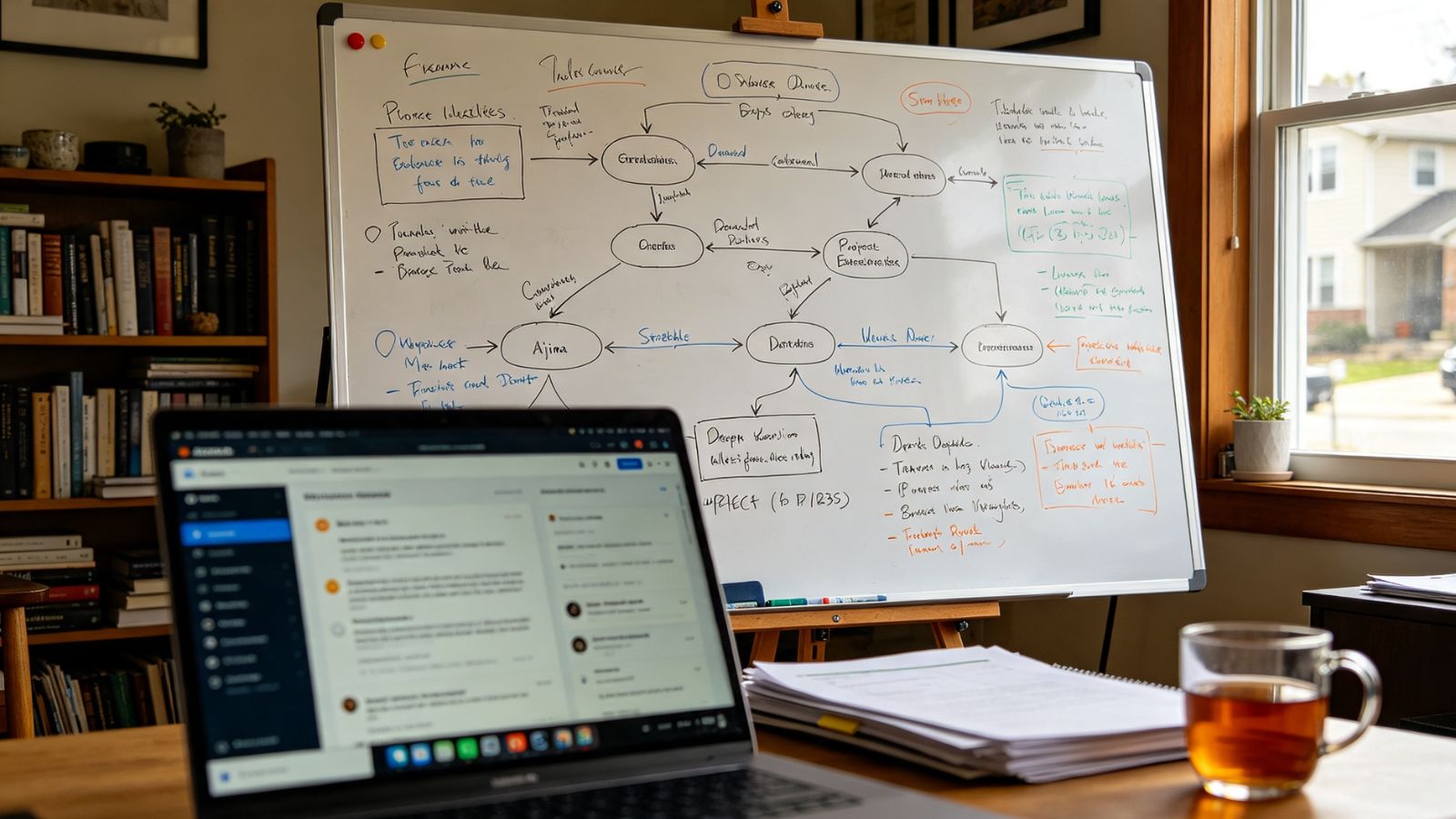
One of the most damaging aspects of meeting-centric environments is that the consequences are often invisible. Organizations typically measure deadlines, deliverables, and financial performance, but they rarely measure the cost of fragmented attention. As a result, communication systems continue expanding long after they begin reducing productivity.
Innovation is usually the first casualty. New ideas rarely emerge during tightly structured conversations that focus on immediate deliverables and status updates. They tend to develop during periods of uninterrupted exploration, when individuals have enough time to connect unrelated concepts, experiment with different approaches, and reconsider existing assumptions. When workdays become dominated by continuous meetings, employees naturally shift toward shorter, safer, and more reactive tasks because those tasks fit more comfortably into fragmented schedules. Research and workplace analyses have repeatedly highlighted the connection between excessive interruptions and reduced opportunities for deep, focused work.
Morale eventually follows the same downward trajectory. Employees often describe meeting fatigue as one of the most frustrating aspects of modern work because it creates the impression of constant activity without corresponding progress. Many professionals do not become disengaged because they dislike their work. They become disengaged because they rarely have enough uninterrupted time to perform it well. Several organizations that have intentionally reduced unnecessary meetings have reported improvements in both productivity and employee satisfaction, suggesting that meeting culture directly influences workplace well-being. (float.com)
Reducing meeting overload does not require eliminating meetings altogether. Instead, organizations should begin by questioning whether a meeting is actually the most effective communication method. Many updates that traditionally consume thirty or sixty minutes can be delivered more efficiently through written documentation, recorded presentations, or shared project dashboards.
An asynchronous-first approach often produces better results because it allows people to consume information when they are most prepared to process it. A written project update can be reviewed in five minutes instead of requiring an entire team to attend a scheduled meeting. A recorded presentation allows employees to pause, rewind, or revisit important information without coordinating schedules across multiple time zones. Even when live discussions remain necessary, distributing documents before the meeting changes the conversation from passive listening into active decision-making. Organizations that adopt document-first practices often create more focused and productive discussions because participants arrive with a shared understanding of the material. Similar approaches have been highlighted by productivity-focused organizations that emphasize documentation and asynchronous collaboration over excessive synchronous communication. (float.com)
Equally important is redefining the cultural expectations surrounding meetings. Employees should not feel obligated to attend discussions that do not require their input. Leaders should normalize declining unnecessary invitations, canceling meetings that no longer serve a clear purpose, and replacing recurring sessions with alternative communication methods. Changing tools without changing expectations rarely produces meaningful improvements. Lasting change happens when organizations stop equating responsiveness with productivity.

Protecting deep work requires structural changes rather than individual willpower. Telling employees to focus more while simultaneously filling their calendars with meetings creates an impossible contradiction. Focus must be protected at the organizational level through policies that recognize uninterrupted time as an essential business resource.
One effective strategy is creating protected focus periods across entire teams. Some organizations designate specific mornings or afternoons as meeting-free blocks, while others group meetings into designated windows to preserve longer periods for concentrated work. The specific format matters less than consistency. When deep work becomes a shared organizational expectation rather than an individual preference, employees gain permission to disconnect temporarily without feeling that they are neglecting their responsibilities. Several modern productivity frameworks recommend establishing dedicated focus blocks because they reduce context switching and create predictable periods for meaningful work.
Regular calendar audits can also prevent meeting overload from becoming permanent. Recurring meetings should not exist indefinitely simply because they once served a useful purpose. Teams should periodically review every scheduled session and ask a few straightforward questions. Does this meeting still support an active objective? Are all attendees necessary? Could the information be communicated asynchronously? Small adjustments accumulated over time can dramatically reduce calendar density. Organizations that treat meetings as intentional tools rather than automatic habits often discover that protecting attention improves both collaboration and execution.
The cost of constant connectivity extends far beyond an overcrowded calendar. It affects how people think, create, solve problems, and experience their work. When meetings become the dominant structure of the workday, deep work gradually disappears, and organizations begin mistaking visible activity for meaningful progress.
Protecting focus does not require abandoning collaboration. It requires designing communication systems that respect attention as a finite resource. By reducing unnecessary meetings, embracing asynchronous communication, creating protected focus periods, and regularly auditing team schedules, organizations can build environments where collaboration and concentration coexist. The goal is not to schedule less for the sake of efficiency. The goal is to create enough uninterrupted space for important work to happen.