
Scope creep is rarely caused by one obviously poor decision. In most projects, it develops gradually through a series of reasonable requests, informal agreements, and assumptions that were never fully examined. A stakeholder asks for an additional feature, a team discovers a potential improvement, or a manager suggests expanding the original goal because the opportunity appears valuable. Each individual request may seem manageable, but the combined effect can significantly change a project’s scope, timeline, cost, and resource requirements.
The challenge for project teams is not eliminating change. Change is a normal part of successful projects because organizations often learn more as work progresses. The real challenge is ensuring that changes are evaluated intentionally rather than accepted automatically. Effective scope management requires a balance between flexibility and control. The Project Management Institute (PMI) identifies scope control as the process of monitoring project status and managing changes to the approved scope baseline, which helps teams maintain alignment between project goals and actual work being performed. (pmi.org)
Preventing scope creep requires two connected practices: stakeholder alignment and change management. Stakeholder alignment ensures that everyone understands the project’s purpose, priorities, and limitations. Change management provides a consistent method for reviewing new requests and deciding whether they support the project’s objectives. Together, these practices help organizations adapt without allowing a focused initiative to become an uncontrolled collection of additional work.
Many teams assume scope creep happens because projects lack planning, but the reality is more complicated. Even carefully planned projects encounter new information, changing business priorities, and unexpected requirements. The problem begins when teams respond to those changes without considering their effect on the overall project. A small modification in one area can create additional work in testing, documentation, training, technology, or operations.
One common cause is unclear project boundaries. If stakeholders understand the project goal differently, they may each believe their requests are naturally included. For example, a company launching a customer service platform may define the project objective as improving customer response times. The customer support team may expect better case management, executives may expect advanced reporting, and sales teams may request customer visibility features. Each expectation may be reasonable, but without clear scope definition, the project can expand far beyond its original purpose.
Another cause is weak requirements management. When requirements are collected informally or without prioritization, teams may struggle to determine which requests are essential and which are optional. A project charter, scope statement, and approved requirements provide a reference point for evaluating future decisions. Without these foundations, teams often make decisions based on individual requests rather than the broader project strategy.
The most difficult scope problems often come from small decisions that seem harmless at the time. A developer adds an extra capability because it requires little additional effort. A manager requests another report because the data already exists. A stakeholder asks for a workflow adjustment because “the team is already working in that area.” These decisions become risky when their combined impact is never reviewed.
Stakeholder alignment is one of the strongest protections against scope creep because it addresses problems before they become change requests. Alignment means that key participants understand the project’s intended outcome, priorities, constraints, decision authority, and definition of success. It does not mean every stakeholder receives every requested feature or improvement.
The first step is identifying who has influence over the project and understanding what each group expects. Different stakeholders often evaluate success from different perspectives. A financial leader may focus on return on investment and budget control, while operational teams may prioritize usability and efficiency. Customers may care about convenience and reliability. These perspectives are all valuable, but the project team must connect them to the agreed business objective.
Clear discussions about tradeoffs are essential during alignment. Many scope disagreements happen because teams discuss what should be added without discussing what must change as a result. Adding a new requirement may be possible, but stakeholders need to understand whether it requires additional funding, a delayed launch date, fewer existing features, or more resources.
Strong alignment also requires clear ownership of decisions. If everyone can request changes but nobody is responsible for evaluating their impact, projects quickly become vulnerable to scope expansion. Defining who can approve changes, who provides input, and who makes final decisions creates accountability throughout the project lifecycle.
Stakeholder alignment should continue after project kickoff. Regular reviews, milestone discussions, and decision meetings help confirm that priorities remain consistent. Projects often fail not because stakeholders were ignored, but because expectations changed while communication stayed the same.

A change management process gives teams a structured way to handle new requests after work has started. Without a defined process, project changes often happen through informal conversations, emails, or meetings where the long-term impact is difficult to track. A formal approach creates visibility by requiring teams to understand why a change is needed and what consequences it may create.
A practical change process usually begins with documenting the request. The request should explain what is being changed, why the change matters, and which project goals it supports. The project team then performs an impact assessment that considers factors such as timeline, budget, resources, technical complexity, risks, and affected deliverables.
Many organizations use a Change Control Board (CCB) or similar decision group for significant scope changes. The purpose of this group is not to slow projects down but to make sure important decisions receive appropriate review. A CCB may include project sponsors, business representatives, technical leaders, and other stakeholders who understand the project’s priorities. The group evaluates whether the proposed change creates enough value to justify its impact on the existing plan.
The most effective change processes remain practical rather than bureaucratic. A complicated approval system can encourage teams to avoid documentation entirely. The goal is not creating more administrative work; the goal is making decisions visible. Every approved change should have a clear reason, responsible owner, updated expectations, and a documented impact on the project plan.
One of the most important skills in preventing scope creep is understanding that not all changes have the same value. Some changes are necessary to protect project success, while others are improvements that may be better handled in a future phase or separate initiative.
A necessary change usually affects the project’s ability to achieve its original objective. For example, a software implementation project may discover that additional security requirements must be completed before launch. Although this expands the original work, the change may be essential because the project cannot succeed without meeting those requirements.
Attractive additions are different. They may improve the final product but are not required for the original goal. Imagine a company building an internal employee portal. During development, users request advanced customization features, personalized dashboards, and additional analytics. These ideas may create value, but adding them late in the project could delay the primary goal of delivering a reliable employee resource system.
A useful question for evaluating changes is: “Does this request significantly improve the intended outcome enough to justify the additional impact?” This shifts the discussion away from whether an idea is good or bad. Many scope additions are valuable ideas; they simply may not belong in the current project.
Organizations can also maintain a backlog of deferred improvements. This approach allows teams to capture useful ideas without allowing every request to interrupt current priorities. A postponed idea is not necessarily rejected. It may become part of a future release, another project, or a later improvement cycle.
Consider a company implementing a new enterprise resource planning (ERP) system across finance, operations, and purchasing departments. The original objective is to replace disconnected systems and create more consistent business processes. During implementation, department leaders begin requesting additional dashboards, customized workflows, and new automation features.
Without a change management process, these requests may gradually become part of the project. The implementation team may continue accepting additions because each request appears valuable. However, the combined effect could increase testing requirements, delay employee training, and push the launch date beyond the original schedule.
A structured approach would begin by reviewing each request against the approved project scope. The team would determine whether the request supports the primary business objective, evaluate the impact on resources and timeline, and present significant changes to the appropriate decision-makers. Some requests might be approved because they are essential. Others might be documented for a future phase.
This example illustrates an important principle: controlling scope is not about protecting the original plan at all costs. It is about making deliberate decisions. A project that adapts through a clear process can respond to business needs while maintaining realistic expectations.
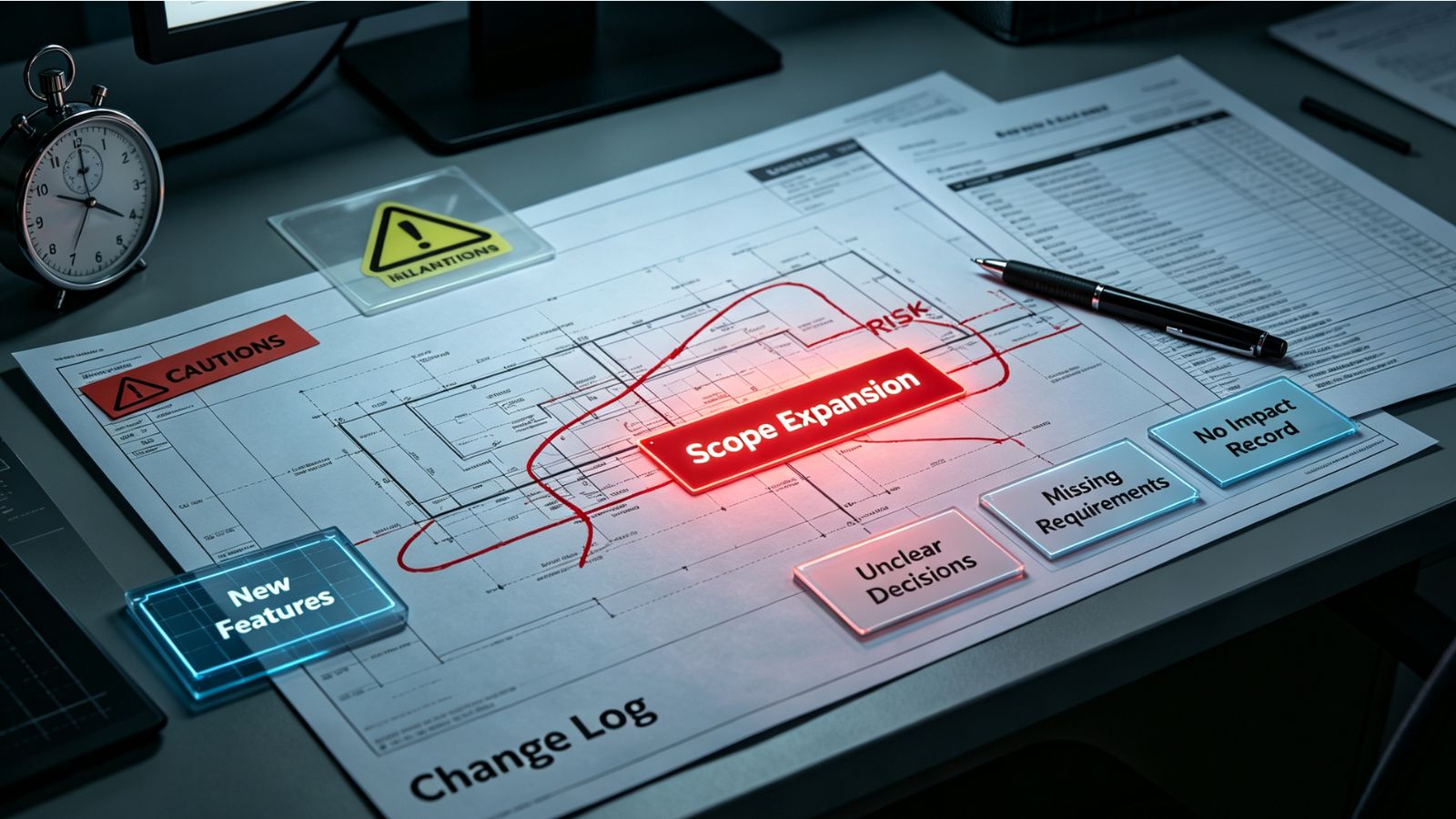
Scope creep becomes easier to manage when teams recognize early warning signals. One common sign is when project discussions increasingly focus on new features instead of the original business outcome. Another is when teams begin completing work that does not appear in approved requirements, plans, or deliverables.
Unclear decision-making is another warning sign. If team members cannot explain who approved a change or why it was added, the project may already be losing control of its boundaries. Maintaining a change log, decision record, and updated project documentation helps prevent confusion and creates a reliable history of project decisions.
Communication also plays a major role in preventing scope problems. When stakeholders understand the consequences of changes, they are more likely to make realistic decisions. Instead of saying only that a request cannot be completed, project leaders should explain the tradeoff: accepting the request may require additional time, budget, or removal of another priority.
Effective scope management creates transparency. It allows teams to recognize when a project is changing and decide whether that change is worth accepting. The goal is not preventing all adjustments but ensuring that adjustments happen intentionally.
Preventing scope creep requires more than creating an initial project plan. Successful organizations build systems that help teams evaluate change while protecting the project’s original purpose. Stakeholder alignment creates shared expectations, while change management processes provide a reliable way to review and approve modifications.
The strongest projects are not those that never change. They are projects where changes are visible, evaluated, and connected to clear business decisions. By defining scope carefully, aligning stakeholders early, and managing requests through structured processes, teams can remain flexible without allowing small additions to undermine major project goals.